
I've been building websites since I was 14.
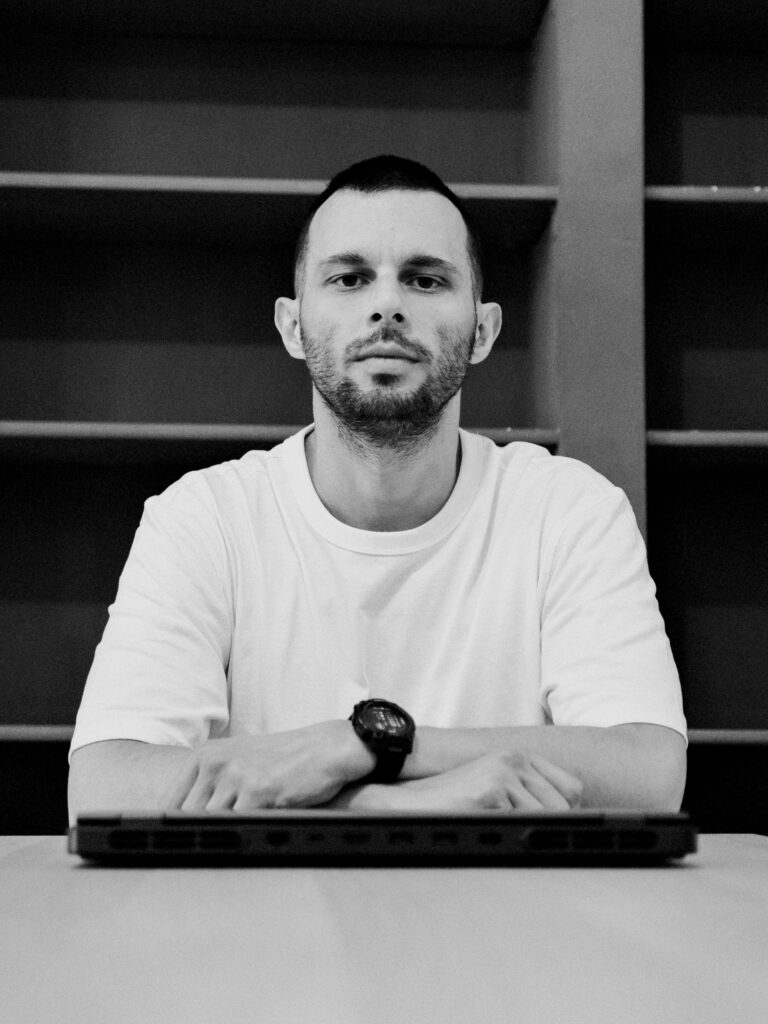
About me
It started with a friend’s server. I didn’t really know what I was doing, I just wanted to see if I could make something show up on a screen. That was enough to get me hooked.
By 15 I was freelancing. Picking up gigs on Digital Point Forums, learning from Smashing Magazine books, figuring things out one project at a time. This was 2007, right as the global financial crisis was hitting. Not exactly the ideal time to start a career, let alone as a teenager with no formal training and no safety net.
I kept going anyway. Through high school, through the uncertainty, through months where work was thin and months where it wasn’t. By the time I got to university in 2011, I’d already been freelancing for four years. Uni didn’t last. I wish I could say I dropped out with a clear plan, but it was more of a gut decision than a strategic one. I knew the structure wasn’t working for me. I didn’t fully know what would. I jumped and figured it out on the way down.
After dropping out, I started working alongside designers in local studios. That changed how I thought about the work. I’d sit next to them and watch how they made decisions. Not just what they did, but why.
That’s where I developed the instinct that separates me from most developers: I don’t just know how to build something, I understand why it should be built a certain way.
I’ve never been employed in this field. Not once. Freelancing since 2007, finding my own clients, solving my own problems, taking full responsibility for the work. That doesn’t mean it’s been smooth the whole way.
Freelancing has a feast-famine cycle that never fully goes away. I’ve had clients ghost me. I walked away from a long-term collaboration after about five years because our values stopped aligning. And honestly, at least once a year I wonder if I should just get a job and let someone else deal with wearing all the hats.
I keep choosing not to. Not because freelancing is easy, but because the alternative doesn’t fit how I think or work. I’d rather deal with the uncertainty than give up the independence.
When I'm not working
I shoot film. Picked it up in 2025 because I needed something deliberately slow and analog, away from screens. 36 frames on a roll, every one costs money, no deleting and retrying. It forces you to pay attention before you press the button. I like that.
I read a mix of things. Some science fiction, some biography and history. I’m less interested in dates and battles and more in how things actually changed for people. The social and economic side of what happened and why it mattered. Some personal development too, when it’s not the self-help kind.
I set up a homelab recently because I wanted to understand infrastructure at a deeper level. Same reason I started building websites as a kid. Curiosity and the satisfaction of making something work.
I grew up in Sighișoara, a small medieval town in Transylvania where Romanian, Saxon, and Hungarian cultures all layered on top of each other. Now I live near Cluj-Napoca, which is the opposite. Big, fast, crowded. I’d like to find somewhere quieter in Romania eventually. More space, less noise.
I also post weird memes sometimes. Fair warning.
What I think this industry gets wrong
Too many freelancers build sites that only they can maintain. Some do it by accident. Some do it on purpose so the client can’t leave. I’ve inherited enough of these messes to know the difference.
Agencies sell you a senior developer and hand the work to a junior. Developers hold clients hostage through technical complexity that didn’t need to be there. And lately, AI-generated templates get passed off as custom work by people who couldn’t build the thing properly without it.
I use AI tools myself. They’re useful, but there’s a difference between using AI to augment your work and using it to skip understanding the work entirely. If you can’t build it without the tool, you can’t fix it when the tool gets it wrong.
I don’t think most of the bad practices in this industry are malicious. I think they’re lazy. People default to what’s fast and profitable instead of what’s right for the client. And because most clients can’t tell the difference, nobody pushes back.
I push back. Not because I enjoy the argument, but because I’ve spent years learning why things should be built a certain way, and I care too much about the outcome to keep quiet when something’s heading in the wrong direction. I’m also happy to be wrong, but “just because” has never been a good enough reason for me.
What working with me looks like
I specialize in WordPress. Eight years deep in it, backed by broader knowledge of server infrastructure, Docker, automation. Most WordPress developers don’t touch that layer. It means I can handle things other specialists can’t.
I work async. Email and text, not calls. A written answer is clearer, you can reference it later, and neither of us has to schedule anything. It’s a better way to communicate for the kind of work I do.
I build things so my clients can handle small changes themselves. I don’t create dependency, but I’m there when it actually matters. Some of my clients have been with me close to a decade because of that.
I’m pragmatic, but I won’t cut corners. I’ll find the simplest solution that does the job right. And if your idea is going to make your site worse, I’ll tell you before you spend the money.
What they say
“Mihai is the consummate professional when it comes to full-service web development, guidance, and strategic advice. What stands out most is his pragmatic approach, speed, and ability to consider multiple angles when tackling problems to deliver outstanding results.”
Sarah Burgess
Product & Growth Leader
Let's talk
Tell me what you're dealing with. I'll tell you if I can help.
Have a project in mind? A few sentences is enough. Tell me what you need, whether you have an existing site, and any timeline or budget in mind. I’ll ask follow-up questions if I need more detail. I usually reply within a day or two.